
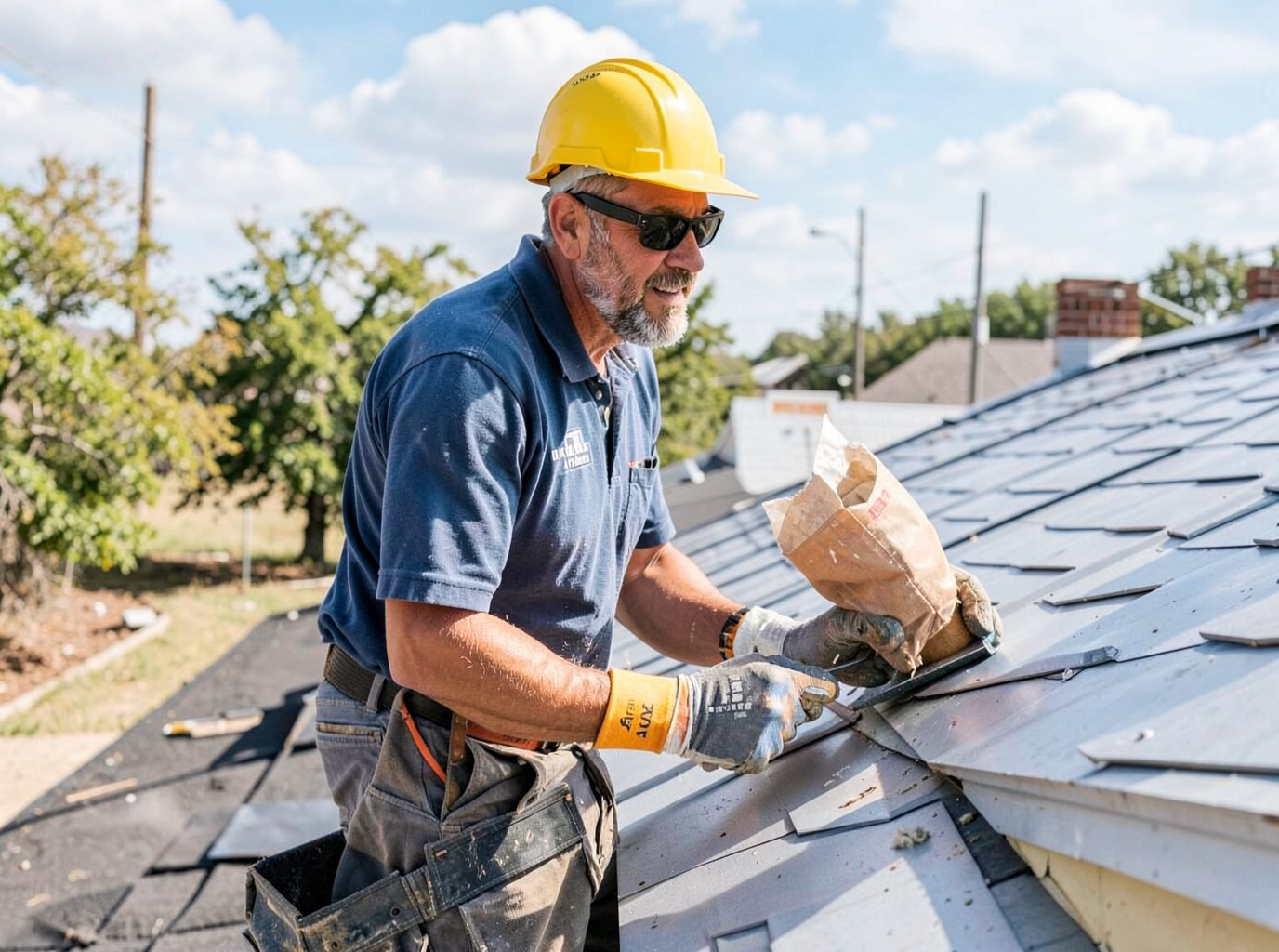
College Hills sits in the 76904 zip within Tom Green County, where homes built mostly between the 1950s and 1970s line streets like College Hills Drive and W Avenue N. These ranch-style houses typically carry asphalt shingle roofs that see heavy sun exposure and occasional spring hail. A San Angelo roofing contractor working here checks for lifted tabs and cracked underlayment that develop faster than in newer subdivisions because of the original decking and limited attic ventilation common in the neighborhood.
Access to College Hills runs along North Bryant Boulevard and side streets that border Angelo State University. Crews often stage materials near College Hills Elementary School to keep trucks off narrow residential lanes. The semi-arid climate brings hot summers that soften shingles and cool winters that can cause thermal cracking, so local roof work focuses on proper ventilation and ice-and-water shield along the limited valleys found on these single-story homes.
Drainage around College Hills lots is generally flat with shallow swales that direct water toward the Concho River. During rare heavy rains, crews watch for ponding at eaves and ensure new gutters tie into existing yard drains without disturbing mature oak and pecan trees that line many properties.
Around College Hills, TX
We regularly work near:
- 📍College Hills Elementary School
- 📍Angelo State University
- 📍Concho River
- 📍College Hills Baptist Church
Roofing Contractor in College Hills, TX — Local Notes
- •Most College Hills roofs are three-tab shingles installed over plywood or spaced decking from the 1960s; replacement often requires deck inspection and occasional plywood overlay.
- •Lots are narrow with mature trees and fences close to the house, so material delivery and dumpster placement require careful planning to avoid neighbor driveways.
- •South-facing slopes receive direct summer sun that accelerates granule loss; crews use lighter-colored shingles to reduce heat gain on these exposures.
- •Proximity to the Concho River means occasional high humidity during storms, so ridge vent installation must include proper baffles to prevent wind-driven rain entry.