
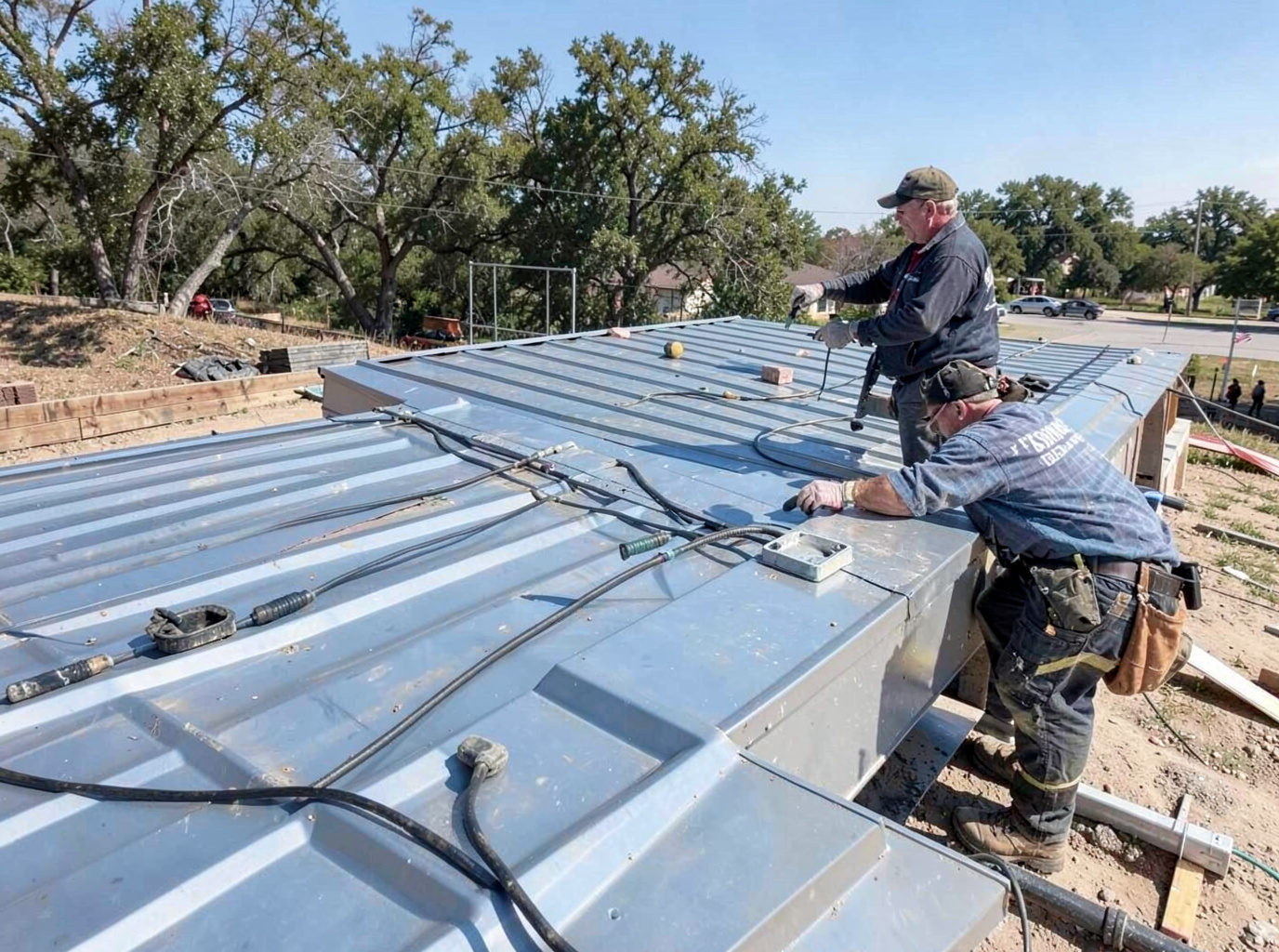
Metal roofing performs well in San Angelo because it reflects heat during long summers and sheds the occasional heavy rain that runs off the Concho River watershed. Homeowners in Santa Rita and Angelo Heights often choose standing seam systems over older asphalt shingles because the metal withstands the temperature swings that crack traditional materials. Proper underlayment and ventilation become critical when attic spaces trap heat against the panels.
Wind-driven rain and occasional hail require specific clip spacing and gauge selection on roofs in Lake View and Downtown San Angelo. Installers must account for the age of many homes built before modern code updates, where decking may need reinforcement before panels are fastened. Fastener patterns change on steeper pitches common in Angelo Heights to prevent uplift during spring storms.
Working near Fort Concho and the Concho River means crews watch for moisture that can accelerate corrosion at seams if coatings are not applied correctly. Metal also expands and contracts more noticeably in the cool winter nights after hot days, so expansion joints must be placed properly on longer runs. Local crews often fabricate trim on-site to match the irregular rooflines found on older Tom Green County homes.
Technician insight
In San Angelo the thing that catches most people out with metal roofing installation is underestimating how much the panels expand and contract between hot summer days and cool winter nights, especially on longer runs in Santa Rita homes. Wind off the open terrain around Tom Green County also demands tighter clip spacing than most crews use in Abilene or Midland.
Metal Roof on 1960s Home in Santa Rita
The homeowner needed a durable replacement after wind lifted several shingles during a spring storm. We found soft decking along the north slope near the Concho River drainage. We reinforced the deck, installed synthetic underlayment, and ran standing seam panels with extra clips at the eave. The roof now handles the temperature swings without fastener pop.
Metal Roofing Installation Services We Offer
✓Standing Seam Metal Roofing Installation
Hidden fastener systems that reduce leak points on homes exposed to wind off the Concho River and temperature swings in Santa Rita.
✓Corrugated Metal Panel Installation
Durable screw-down panels suited for barns, workshops, and residential outbuildings in Angelo Heights and Lake View.
✓Metal Roof Over Existing Shingles
Direct overlay that avoids full tear-off on older homes in Downtown San Angelo where decking remains sound.
✓Metal Roofing for Steep Pitch Roofs
Specialized fastening and safety measures for the steeper slopes found on many historic properties near Fort Concho.
✓Custom Trim and Flashing Fabrication
On-site bending of valley and ridge trim to fit irregular rooflines common in Tom Green County homes.
Metal Roofing Installation Cost in San Angelo, TX
| Service | Typical Range | What Affects It |
|---|---|---|
| Standing Seam Installation | $9–$16 per sq ft | Higher on steep pitches in Angelo Heights |
| Corrugated Panel Installation | $6–$11 per sq ft | Lower cost for simple gable roofs in Lake View |
| Overlay Over Shingles | $5–$9 per sq ft | Requires sound decking in Santa Rita homes |
| Custom Flashing Fabrication | $450–$850 per job | Varies with roof complexity near the Concho River |
Ranges are typical for San Angelo, TX and confirmed with an exact written quote before any work starts.
How it works
- 1
Site Assessment
Measure the roof, check deck condition, and note wind exposure in neighborhoods like Lake View or Santa Rita.
- 2
Material Selection
Choose gauge and coating based on sun exposure and proximity to the Concho River moisture.
- 3
Deck Preparation
Reinforce or replace damaged sheathing on older homes before installing underlayment and panels.
- 4
Panel Installation
Fasten panels with proper clip spacing, install custom trim, and seal all penetrations.
- 5
Final Walkthrough
Inspect seams, fasteners, and drainage before handing the roof over to the homeowner.
Pricing
Prices depend on gauge, pitch, and access in older neighborhoods.