
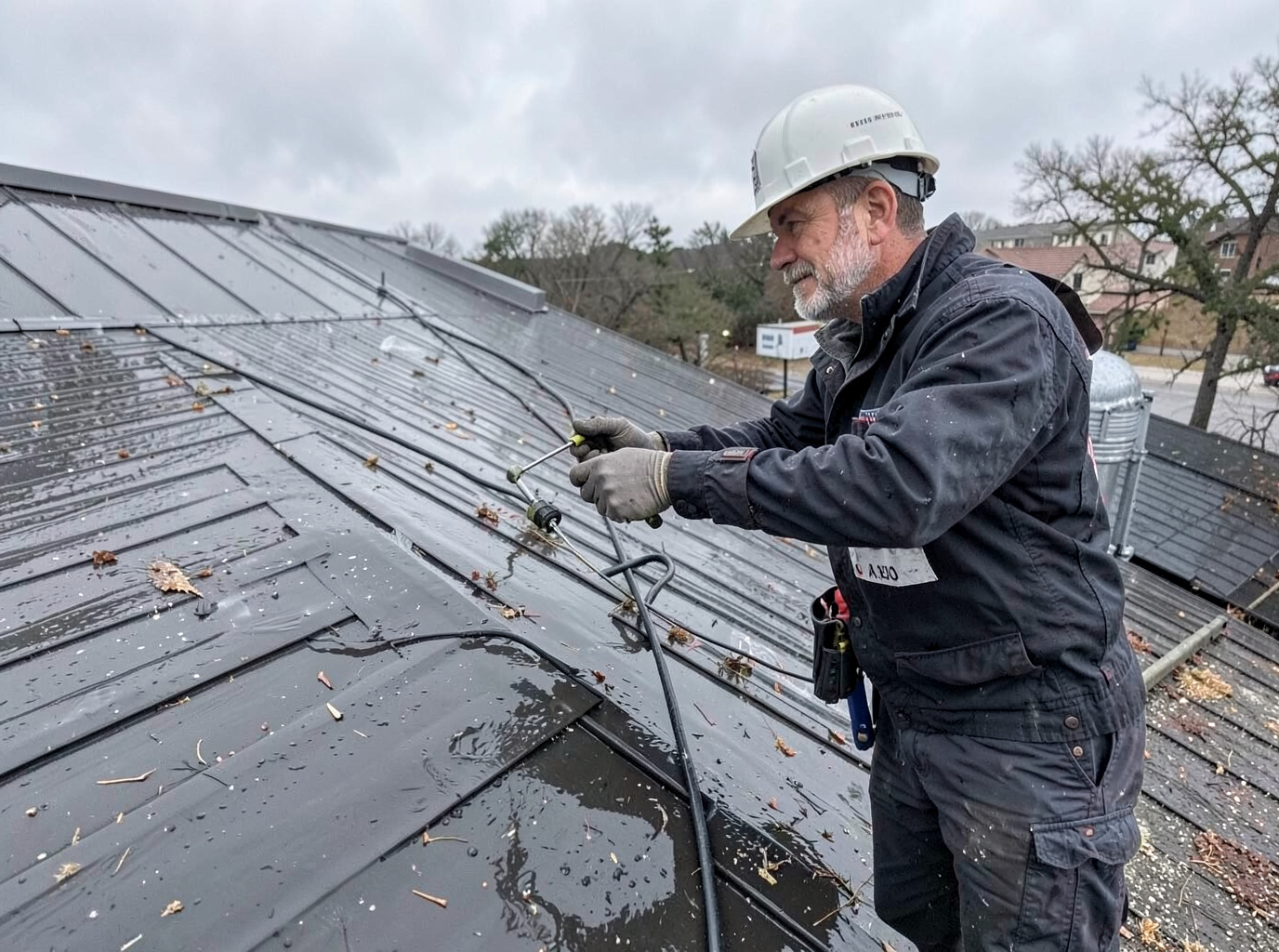
San Angelo's semi-arid climate brings sudden hail and wind events that hit older homes hardest, especially in Downtown San Angelo and Santa Rita where many roofs date back decades and use asphalt shingles or metal panels over original decking. After a storm, inspectors check for granule loss, dented flashing around chimneys, and lifted edges near the Concho River where humidity spikes can trap moisture under layers. Fort Concho-area properties often show hidden leaks at valleys because cool winter nights cause materials to contract after hot summer damage.
Wind-driven rain from storms moving through Tom Green County frequently forces water under ridge caps and around attic vents on homes in Angelo Heights and Lake View. A proper inspection includes walking the full perimeter, probing soft spots with a screwdriver, and using binoculars on steeper pitches common to the local housing stock. Nearby cities like Abilene and Midland see similar patterns, but San Angelo's mix of limestone soil and occasional flash flooding adds ground-level moisture risks that affect lower roof edges.
Homeowners in these neighborhoods often miss small punctures from hail because the semi-arid conditions dry out evidence quickly. Inspectors note any prior repairs that may have used mismatched materials and check attic insulation for water stains that signal ongoing issues. This work stays grounded in observable conditions rather than assumptions about storm intensity.
Technician insight
In San Angelo the thing that catches most people out with Roof Inspection After A Storm is how cool winter nights pull apart seams that looked fine right after a summer hail event, especially on older metal roofs in Downtown San Angelo where the Concho River humidity keeps residual moisture trapped.
Lake View Home After Spring Hail
Wind-driven hail struck a 1970s home in Lake View. The inspection revealed crushed shingles along the south slope and water stains in the attic near the ridge. We documented the damage and noted that prior sealant patches had failed due to temperature swings, allowing the homeowner to address repairs before winter contraction worsened the leaks.
Roof Inspection After a Storm Services We Offer
✓Hail Damage Assessment
Identifies granule loss and dents on asphalt and metal roofs common in Santa Rita and Lake View after spring and summer storms.
✓Wind Uplift Inspection
Checks for lifted shingles and compromised flashing on homes in Angelo Heights where open terrain allows stronger gusts.
✓Moisture Intrusion Check
Probes attic spaces and valleys for trapped water near the Concho River and in older Downtown San Angelo properties.
✓Flashing and Sealant Review
Examines chimney and vent flashings that fail after temperature swings between hot summers and cool winters in Tom Green County.
✓Drone-Assisted Perimeter Scan
Uses aerial views to spot edge damage on steep roofs typical of homes near Fort Concho and San Angelo State Park.
Roof Inspection After a Storm Cost in San Angelo, TX
| Service | Typical Range | What Affects It |
|---|---|---|
| Standard Single-Story Inspection | $175–$325 | Homes in Santa Rita or Lake View with easy ladder access |
| Two-Story Or Steep Pitch Inspection | $275–$450 | Angelo Heights properties with taller structures |
| Inspection Plus Written Report | $225–$400 | Includes photos and summary for insurance purposes |
Ranges are typical for San Angelo, TX and confirmed with an exact written quote before any work starts.
How it works
- 1
Schedule And Site Arrival
Confirm details and arrive at the San Angelo address with basic tools and safety gear suited to local roof pitches.
- 2
Exterior Walk And Probe
Examine shingles, metal panels, and edges for storm marks while noting any soft spots from prior moisture exposure.
- 3
Attic And Interior Review
Enter the attic to look for stains or insulation damage that indicates leaks from wind-driven rain.
- 4
Documentation And Report
Photograph findings and provide a written summary of observed conditions and recommended next steps.
Pricing
Most post-storm inspections fall into a modest range based on roof size and access difficulty.